 EN
EN  FR
FR 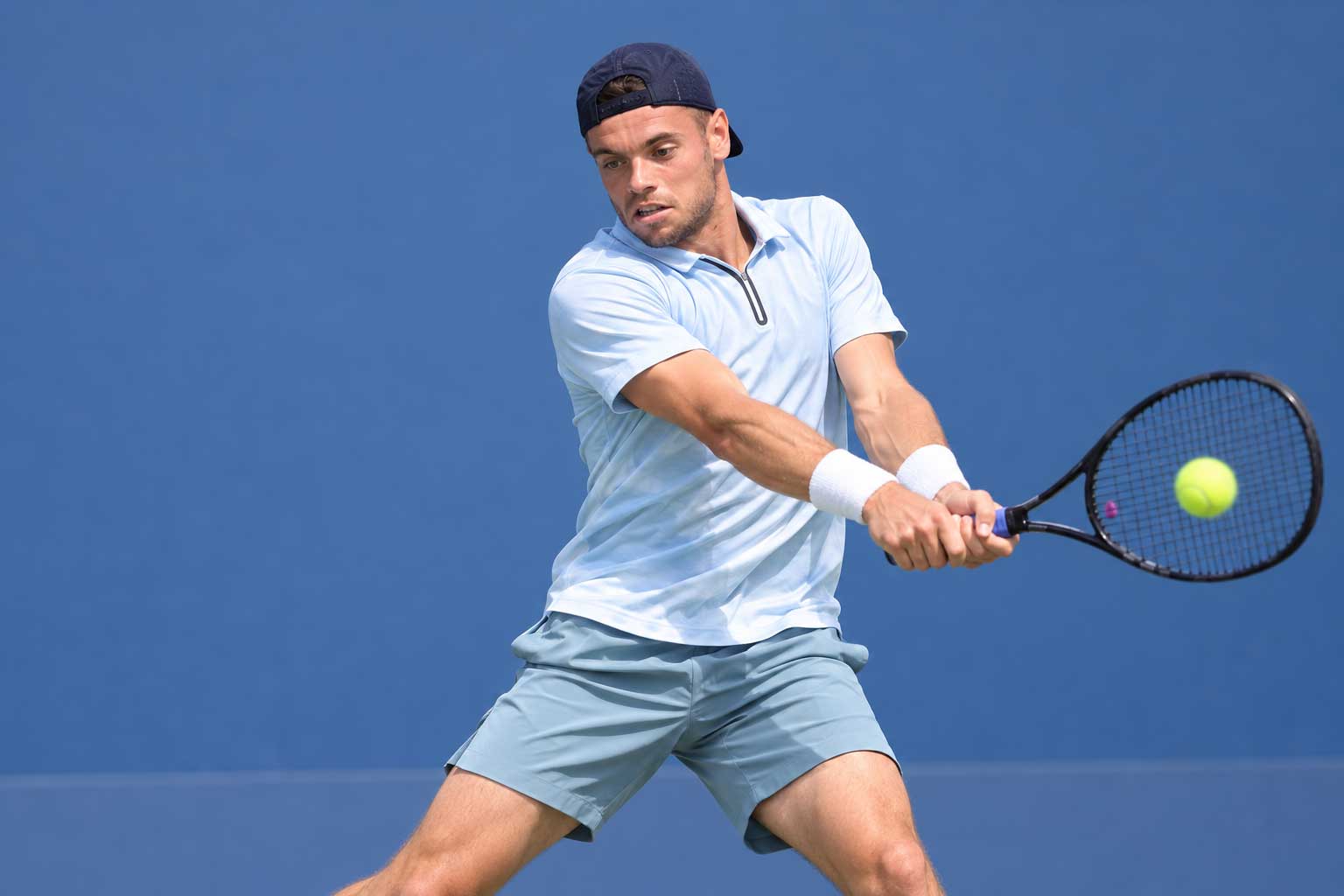
Inside Tennis
Arthur Gea Reaches the US Open Round of 16: The Rise of a Player Trained at Barrere Academy
Arthur Gea Reaches the US Open Round of 16: The Rise of a Player Trained at Barrere Academy
French tennis has one of its great stories of the 2026 US Open. At just 21 years old, Arthur Gea has reached the Round of 16 at the Grand Slam tournament in New York after producing another outstanding performance.
It is a particularly special achievement for Barrere Academy, where the young French player spent several important years of his tennis development from a very early age.
On Saturday night at Flushing Meadows, Arthur Gea had to dig deep to overcome American player Michael Zheng. After almost four hours of intense tennis, the Frenchman eventually won in five sets, 7-6, 3-6, 4-6, 6-3, 6-2.
After trailing by two sets to one, Gea showed remarkable resilience to turn the match around and qualify for the Round of 16 of a Grand Slam tournament for the first time in his professional career.
An US Open Journey That Almost Ended Before It Had Even Begun
Arthur Gea's run at the US Open is even more remarkable considering that he had initially been eliminated in the final round of qualifying.
At that point, the French player could reasonably have believed that his New York adventure was over. However, the withdrawal of Casper Ruud gave him a second opportunity to enter the main draw as a lucky loser.
Arthur Gea has made the most of that opportunity.
Round after round, the young Frenchman has displayed his quality, physical strength and fighting spirit, eventually becoming the last French player remaining in the men's singles draw.
His performances have attracted increasing attention from both regional and national sports media in France.
His achievement is also historically significant. Arthur Gea became only the second lucky loser in the Open Era to reach the second week of the US Open, following Frenchman Corentin Moutet, who achieved the feat in 2022.
At only 21 years old, Gea is confirming a rapid progression that has accelerated significantly over recent months.
A Competitive Mindset Already Visible During His Early Training
For those who knew Arthur as a young player, his ability to compete, fight for every point and raise his level during important matches is not entirely surprising.
Arthur Gea joined Barrere Academy at a young age and spent several key years there during his development as a tennis player.
Under the guidance of Alain Barrère and the Academy's coaching team, he was able to build the technical, physical and mental foundations required to develop towards elite-level tennis.
Long before the major international stadiums and Grand Slam matches came the countless hours of practice, repetitions, junior tournaments and the daily commitment required to improve.
Speaking to the local press about his former player's remarkable run in New York, Alain Barrère explained that he was not entirely surprised by Arthur's success.
He highlighted in particular the mental and physical qualities that Arthur had already demonstrated as a young player at the Academy, as well as his natural ability to perform in major competitions.
Seeing a player who spent such an important part of his development at Barrere Academy reach the second week of the US Open is naturally a source of great pride for the entire coaching team.
It also provides a powerful illustration of the work carried out over many years with young players who want to build a genuine high-performance tennis project.
Developing Tennis Players for the Long Term
The role of a tennis academy is not simply to improve a forehand, a backhand or a serve.
Developing a player also means teaching consistency, discipline, independence, physical preparation, emotional control and the ability to manage the pressure of competition.
Those qualities become particularly important when a match begins to turn against you, exactly as happened to Arthur Gea against Michael Zheng.
After losing the third set and falling two sets to one behind, the Frenchman could easily have seen his US Open run come to an end.
Instead, he responded by winning the fourth set and then gradually taking control of the deciding set.
That ability to continue believing, adapting and competing despite difficult moments is one of the essential qualities required in high-level tennis.
For many years, Barrere Academy has worked with young players with this long-term vision in mind.
Its training programmes allow promising players to combine their sporting development with their education, while benefiting from an environment designed to help them progress technically, physically and mentally.
Arthur Gea therefore joins the list of professional players who have spent part of their development at the Academy, alongside names such as Benoît Paire and Mathias Bourgue.
Every career is different, but each journey demonstrates the importance of providing talented young players with the right environment during the most important years of their development.
From Provence to the Courts of Flushing Meadows
Arthur Gea's story is also particularly significant for tennis in Provence.
Originally from the Vaucluse area and having trained at Barrere Academy in Provence during his youth, he is now competing under the spotlight at one of the four biggest tennis tournaments in the world.
His performances in New York show just how far he has come.
Only a few years ago, his objective was to continue developing through junior tennis and gradually build the game required for professional competition.
Today, Arthur is competing against some of the best players in the world and establishing himself as one of the exciting young talents in French tennis.
The 2026 season already represents an important milestone in his career.
His improvement in the world rankings, his results on the professional circuit and now his qualification for the US Open Round of 16 all confirm that he has taken another significant step forward.
A Place in the Quarter-finals Now Within Reach
The adventure is not over yet.
Arthur Gea will now face Dutch player Botic van de Zandschulp as he attempts to secure a place in the US Open quarter-finals.
Whatever happens next, the 2026 US Open has already become an important moment in the young Frenchman's career.
For the entire Barrere Academy team, seeing Arthur compete at this level is a tremendous source of satisfaction.
His journey also provides an inspiring message for the young players currently training at the Academy.
The biggest sporting achievements often begin far away from the television cameras and packed stadiums.
They begin on a training court, with hard work, patience, difficult moments to overcome and a constant desire to improve.
Everyone at Barrere Academy would like to congratulate Arthur Gea on his outstanding run in New York and wish him every success for the remainder of the US Open and for the next stages of his professional career.
One thing is certain: his journey is only just beginning.
Arthur Gea's US Open Run in the French Media
Arthur Gea's qualification for the Round of 16 has received significant coverage in the French media.
You can read more about his remarkable US Open journey in La Provence, ICI Vaucluse, La Provence and L'Équipe.
Congratulations Arthur! Everyone at Barrere Academy is behind you as this remarkable US Open journey continues.
Discover all our latest news and follow the journey of our young talents at Inside Tennis
What are the essential physical aspects I need to develop to succeed as a professional player of tennis ?
Speed, agility, strength, endurance and flexibility are all crucial physical aspects to develop. Working on these elements will help you be more competitive on court.
How to effectively manage the stress and pressure of important competitions?
Practicing breathing techniques, visualization and pre-match routines can help manage stress. Additionally, focusing on controlling what you can influence and staying in the present moment can reduce the pressure you feel.
What is the best way to structure my training to maximize my progress?
Establishing clear goals, diversifying training types (physical, technical, mental) and working collaboratively with an experienced coach can all contribute to an effective training structure.
What sacrifices will I have to make to pursue a career in professional tennis?
Sacrifices may include compromises on free time, hobbies, and personal relationships. It may also be necessary to give up certain lifestyle habits that could negatively affect performance, such as an unhealthy diet or risky behaviors.
How do I balance my studies and training as a young aspiring professional tennis player?
Planning your schedule wisely, communicating effectively with teachers and coaches, and using effective learning strategies can help balance studying and training.
What are the ideal eating and sleeping habits to optimize my performance on court?
A balanced diet, rich in nutrients and hydration, combined with sufficient and quality sleep, is essential to maintain high energy levels and promote muscle recovery.
How can I improve my concentration and focus during matches?
Practicing mindfulness, developing pre-match routines and using attention reorientation techniques can all help improve concentration and focus during matches.
What is the best approach to developing a strong and resilient mental game?
Working with a mental coach, practicing positive visualization, building self-confidence, and learning to manage negative thoughts and emotions are all components of a strong and resilient mental game.
What are the key things to consider when choosing a coach or training team?
Experience, qualifications, personality, coaching philosophy and the ability to build trust and effective communication are all important factors to consider.
How can I stay motivated and persevere despite defeats and obstacles on the path to becoming a professional tennis player?
Focusing on progress rather than immediate results, setting realistic and meaningful goals, finding sources of inspiration and support, and cultivating a growth mindset can all help maintain motivation and perseverance.
Which tournaments and competitions should I target to gain experience and improve my ranking?
Target tournaments suited to your level of play and your short- and long-term goals, while seeking to face competitive opponents to progress.
How can I effectively manage injuries and prevent recurrence while continuing to progress in my career?
Working closely with medical professionals, following an appropriate rehabilitation program, listening to your body and taking a proactive approach to injury prevention are all essential measures.
What are the most effective strategies for establishing a support network, including potential sponsors and training partners?
Participating in social and sporting events, cultivating authentic professional relationships, creating quality content on social media, and seeking sponsorship and partnership opportunities can all help build a strong support network.
How can I use online resources and new technologies to improve my game and training?
Exploring educational videos, mobile apps, online training platforms and performance tracking tools can provide access to a wealth of information and resources to improve play and training.
p>What career opportunities outside of the professional tennis circuit could I consider as an athlete?
Opportunities include coaching, commentary, teaching, mentoring, sports marketing, event management and community program development. Exploring these options can offer interesting avenues for a rewarding career after professional competition.