 EN
EN  FR
FR 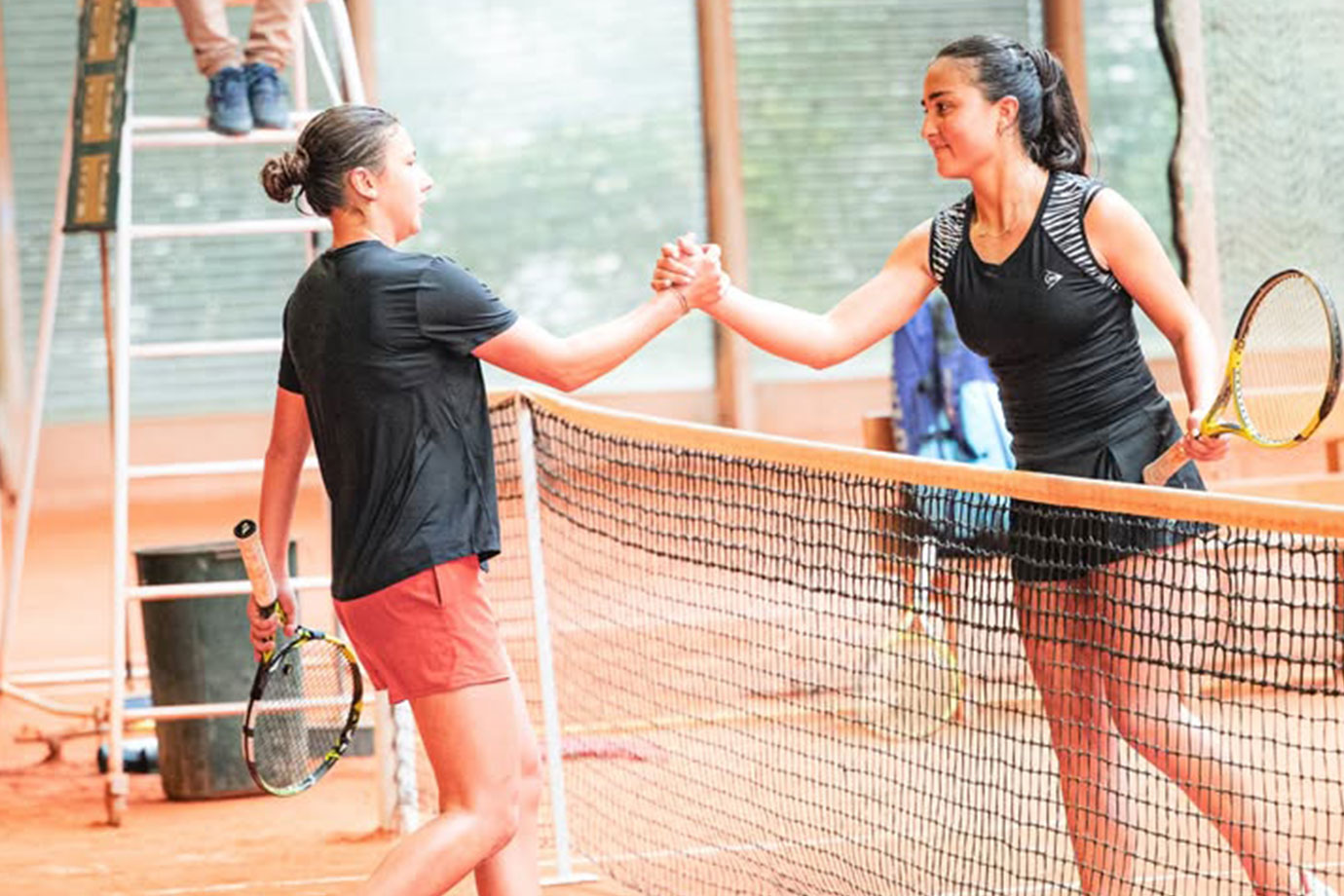
Inside Tennis
International Junior Tennis Tournament: Recap of the ITF J30 US Pontet
Recap of the 3rd edition of the ITF J30 US Pontet international junior tennis tournament
The third edition of the ITF J30 US Pontet international junior tennis tournament once again brought together young talents from around the world. Throughout the week, the courts welcomed players representing 16 different nationalities, confirming the importance of this event within the international junior tennis circuit organized by the International Tennis Federation.
Held in a friendly and competitive atmosphere, the tournament gives promising young players the opportunity to compete at a high level. The ITF J30 tournament in Le Pontet has now established itself as an important event for players aiming to progress in the rankings and gain international experience on the ITF World Tennis Tour Juniors.
An intense week of international junior tennis
Throughout the week, spectators enjoyed exciting and highly competitive matches. The players demonstrated impressive technical skills and determination on the courts. Each match brought its share of emotions, perfectly illustrating the high level of international junior tennis and the importance of these competitions in the development of young athletes.
The tournament was also marked by a fantastic atmosphere around the courts, with many supporters coming to cheer on the players. Competitions like this are an essential step in the development of future professional champions, many of whom will eventually compete on major tours followed worldwide such as the ATP Tour and the WTA Tour.
Tournament results
Women’s Singles
The women’s draw featured many high-level matches. In the final, Italy’s Alice Iozzi defeated France’s Charlotte Cora-Bruneton after an impressive run throughout the tournament.
Winner: Alice Iozzi (ITA)
Finalist: Charlotte Cora-Bruneton (FRA)
Men’s Singles
In the men’s draw, Spain’s Dario Ruiz Cruz delivered an outstanding performance, winning the title against France’s Karlo Filip Jukic. Both players showcased a high level of play in a very competitive final.
Winner: Dario Ruiz Cruz (ESP)
Finalist: Karlo Filip Jukic (FRA)
Women’s Doubles
The Spanish duo Anna Orlando Pellicero and Maria Pares Bergnes de las Casas claimed the women’s doubles title against the Russian team of Daria Belyakova and Angelina Pakhomenko.
Winners: Anna Orlando Pellicero / Maria Pares Bergnes de las Casas (ESP)
Finalists: Daria Belyakova / Angelina Pakhomenko (RUS)
Men’s Doubles
In the men’s doubles event, the Spanish pair Dario Ruiz Cruz and Ian Barroeta secured the title after defeating Japan’s Yuto Hisano and Morocco’s Samy Iraqi in the final.
Winners: Dario Ruiz Cruz / Ian Barroeta (ESP)
Finalists: Yuto Hisano / Samy Iraqi (JPN / MAR)
Congratulations to all participants
We would like to congratulate all players who took part in this third edition of the international junior tennis tournament. Their commitment and passion made it possible to enjoy a week of high-quality tennis.
A huge thank you also goes to all the volunteers who help make this event possible each year. Their dedication is essential in ensuring the tournament runs smoothly and that players are welcomed in the best conditions.
We would also like to thank Art L. Ambert and Alain Nicole for their beautiful photographs capturing the highlights of the tournament. The full ITF photo album is available in our biographies.
See you next year for the next edition of the US Pontet international junior tennis tournament
Following the success of this third edition, the entire team is already looking forward to welcoming players, spectators, and tennis enthusiasts again for the next edition. Another exciting week of international junior tennis awaits.
Discover all our news and follow our young talents on https://www.barrere-academie.com/en/inside-tennis-the-news.
What are the essential physical aspects I need to develop to succeed as a professional player of tennis ?
Speed, agility, strength, endurance and flexibility are all crucial physical aspects to develop. Working on these elements will help you be more competitive on court.
How to effectively manage the stress and pressure of important competitions?
Practicing breathing techniques, visualization and pre-match routines can help manage stress. Additionally, focusing on controlling what you can influence and staying in the present moment can reduce the pressure you feel.
What is the best way to structure my training to maximize my progress?
Establishing clear goals, diversifying training types (physical, technical, mental) and working collaboratively with an experienced coach can all contribute to an effective training structure.
What sacrifices will I have to make to pursue a career in professional tennis?
Sacrifices may include compromises on free time, hobbies, and personal relationships. It may also be necessary to give up certain lifestyle habits that could negatively affect performance, such as an unhealthy diet or risky behaviors.
How do I balance my studies and training as a young aspiring professional tennis player?
Planning your schedule wisely, communicating effectively with teachers and coaches, and using effective learning strategies can help balance studying and training.
What are the ideal eating and sleeping habits to optimize my performance on court?
A balanced diet, rich in nutrients and hydration, combined with sufficient and quality sleep, is essential to maintain high energy levels and promote muscle recovery.
How can I improve my concentration and focus during matches?
Practicing mindfulness, developing pre-match routines and using attention reorientation techniques can all help improve concentration and focus during matches.
What is the best approach to developing a strong and resilient mental game?
Working with a mental coach, practicing positive visualization, building self-confidence, and learning to manage negative thoughts and emotions are all components of a strong and resilient mental game.
What are the key things to consider when choosing a coach or training team?
Experience, qualifications, personality, coaching philosophy and the ability to build trust and effective communication are all important factors to consider.
How can I stay motivated and persevere despite defeats and obstacles on the path to becoming a professional tennis player?
Focusing on progress rather than immediate results, setting realistic and meaningful goals, finding sources of inspiration and support, and cultivating a growth mindset can all help maintain motivation and perseverance.
Which tournaments and competitions should I target to gain experience and improve my ranking?
Target tournaments suited to your level of play and your short- and long-term goals, while seeking to face competitive opponents to progress.
How can I effectively manage injuries and prevent recurrence while continuing to progress in my career?
Working closely with medical professionals, following an appropriate rehabilitation program, listening to your body and taking a proactive approach to injury prevention are all essential measures.
What are the most effective strategies for establishing a support network, including potential sponsors and training partners?
Participating in social and sporting events, cultivating authentic professional relationships, creating quality content on social media, and seeking sponsorship and partnership opportunities can all help build a strong support network.
How can I use online resources and new technologies to improve my game and training?
Exploring educational videos, mobile apps, online training platforms and performance tracking tools can provide access to a wealth of information and resources to improve play and training.
p>What career opportunities outside of the professional tennis circuit could I consider as an athlete?
Opportunities include coaching, commentary, teaching, mentoring, sports marketing, event management and community program development. Exploring these options can offer interesting avenues for a rewarding career after professional competition.